
Bringing Ancient Achievements to Life in the Classroom
When you start teaching about ancient civilizations, it is not unusual to see your students’ eyes glaze over when lessons focus only on timelines, rulers, and vocabulary terms. You may have experienced that moment when your students can recite a few facts but still struggle to understand why these civilizations actually mattered. Many of us run into this challenge when planning our units. The good news is that shifting the focus to “ancient achievements” can completely change how your students engage with the content.
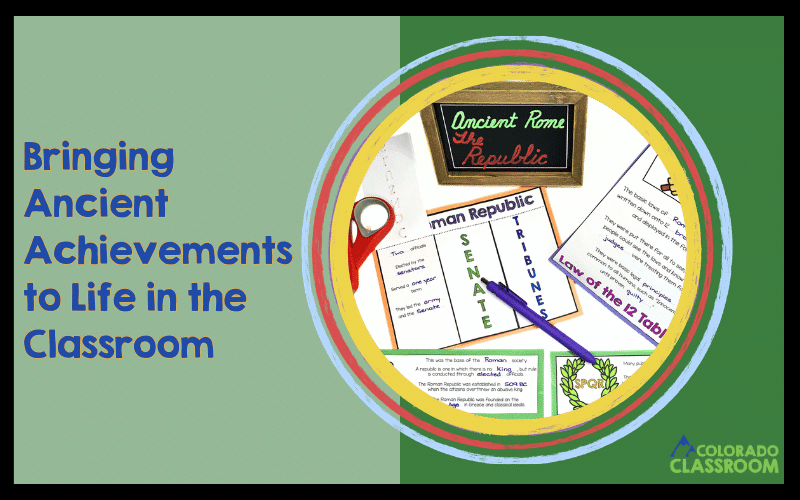
Ancient achievements can be such a powerful teaching strategy. When our students examine how civilizations built cities, developed writing systems, advanced mathematics, or organized governments, they begin to see ancient societies as creative and innovative communities rather than distant historical facts. Students can start asking questions about how civilizations solved problems and shaped the world we live in today.
Why Teaching Ancient Achievements Helps Our Students Understand History
One thing many of us notice when teaching ancient civilizations is that our students sometimes struggle to stay interested when the focus is only on names and dates. While those details matter, they do not always help to understand why these civilizations were important. When you shift the focus to ancient achievements, the conversation changes.

Focusing on ancient achievements also helps our students understand that history is more than a series of events. It is a story about people figuring things out, building new ideas, and shaping the future. When you approach ancient civilizations from this perspective, your lessons naturally become more engaging and meaningful for your students.
Another reason ancient achievements are so engaging is that they naturally lead to great classroom discussions. Our students will start asking questions about how these innovations were created and why they were important. Those types of questions help move lessons beyond memorization and into deeper thinking about how civilizations developed and evolved.
A Simple Way to Introduce Ancient Achievements
If you are introducing ancient achievements, start with a simple discussion prompt. Ask your students: “What inventions or ideas do we still use today that might have started thousands of years ago?” This question immediately shifts their thinking from memorizing facts to understanding the impact, as they have to think about items in their lives that tend to fade into the background due to always being there.

If you are teaching a specific civilization, make a point to connect that civilization’s achievements to our world today. Help students see that we have running water today because of an idea that started thousands of years ago, or that they can thank the ancient people for things like paper and concrete that have a big impact on their lives today.
Another easy strategy is to introduce achievements through categories such as engineering, science, communication, and government. As your students learn about each civilization, they can identify examples of achievements that fit into these categories. This approach helps your students organize their learning and see patterns across civilizations.
You can also have your students keep a running list of achievements in their notebooks or interactive journals. Each time they learn about a new civilization, they add examples of discoveries, inventions, or ideas that helped that society grow.
Exploring Ancient Achievements Across Civilizations
As you introduce ancient civilizations in your classroom, you will likely explore several societies that made significant contributions to human history. Civilizations such as Ancient China, Ancient Mesopotamia, Ancient Egypt, Ancient India, Ancient Greece, and Ancient Rome each developed innovations that helped shape the world. When our students study these societies, they quickly begin to notice that people in many different parts of the world were creating solutions to everyday challenges.

Many early civilizations developed systems to support agriculture, communication, and transportation. Some created early forms of writing so information could be recorded and shared. Others built impressive structures that demonstrated their understanding of engineering and design. As our students learn about these ancient achievements, they start to see how different societies contributed ideas that helped civilizations grow and thrive. This approach also allows our students to compare civilizations and notice similarities between them. For example, students may discover that multiple societies created systems for managing water or organizing cities.
Engineering and Architecture Ancient Achievements
Some of the most impressive ancient achievements our students explore involve engineering and architecture. Ancient civilizations built remarkable structures that required creativity, planning, and advanced knowledge of construction techniques. When our students study these structures, they begin to appreciate how much skill and problem-solving went into building early cities and monuments.
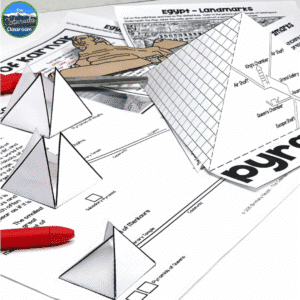
Ancient Egyptians constructed massive pyramids that still stand today. Their existence demonstrates an impressive understanding of engineering and organization. The Romans later developed extensive road systems and aqueducts that connected cities and transported water across long distances. These achievements allowed Roman communities to grow and function efficiently. Have your students explore Life in a Roman Town. They will see how innovations like aqueducts supported daily life by bringing fresh water into growing cities. As your students read about aqueducts, public spaces, and city planning, they will organize their learning in foldable mini-books. As they do, they will see how Roman innovations shaped the functioning of entire communities.
Ancient Greece also contributed columns and carefully designed temples. When we give our students a chance to compare these structures across civilizations, they begin to see how different societies approached similar challenges in building and city planning. Exploring these ancient achievements helps our students understand that engineering innovation has been shaping human communities for thousands of years.
Science and Mathematics Ancient Achievements
Another area filled with fascinating ancient achievements is science and mathematics. Many ideas developed during these civilizations still influence how we study math and science today. When our students learn about these discoveries, they begin to see where all of these science and math concepts originated from.
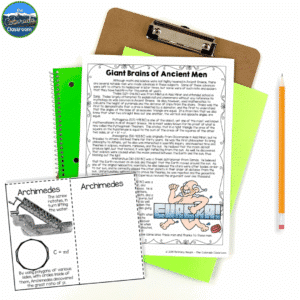
Ancient Greek scholars made important contributions to geometry and mathematical reasoning. Many of the geometric ideas our students encounter in school today were explored by Greek mathematicians who studied shapes, angles, and measurement. These discoveries helped form the foundation for later developments in mathematics. One way your students can explore these ancient achievements is by learning about thinkers like Thales, Pythagoras, and Archimedes. In the Great Brains of Greece, your students can read about Greek figures. They can create a mini interactive notebook highlighting each thinker and their contributions. As they organize the information into their pages, they begin to connect the discoveries of ancient mathematicians to ideas they encounter in modern math and science classes.
Other civilizations also made important scientific contributions. Ancient Indian scholars developed mathematical ideas that influenced later number systems. Ancient Chinese scholars studied astronomy and natural phenomena. When our students examine these ancient achievements, they begin to see how curiosity and observation helped early societies better understand the world around them.
Communication and Writing Ancient Achievements
Communication is another area where ancient civilizations made important advances. Many societies relied on oral retellings to keep their history alive. Eventually, they made the shift to develop writing systems that allowed information to be recorded and shared. These ancient achievements helped civilizations organize their governments, track trade, and preserve important ideas.
Ancient Mesopotamia developed one of the earliest writing systems known as cuneiform. This system allowed scribes to record laws, trade records, and historical events. Having a written record made it easier for leaders to manage growing communities and maintain order.
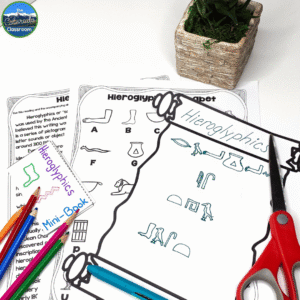
Ancient Egyptians used hieroglyphics, while Chinese civilizations developed written symbols that evolved into the writing systems still used today. Exploring these ancient achievements helps our students understand how communication played a key role in the growth of civilizations. They understand how having the ability to share and store knowledge helped civilizations grow stronger and more organized over time.
Government and Society
Some ancient achievements shaped the way societies organize leadership and laws. These systems helped communities function more effectively and influenced many later governments.
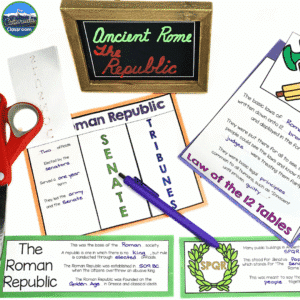
Ancient Greece introduced early ideas about democracy, where its citizens could participate in decision-making. While these systems were very different from our modern democracies, they introduced the concept that citizens could have a voice in government.
Ancient Rome also developed systems of laws and government that influenced later societies. Roman law helped establish ideas about legal rights and civic responsibility. Studying these ancient achievements allows our students to see the impact of early political ideas on many of the government systems in place today.
Questions That Help Students Think About Ancient Achievements
One way to deepen student understanding of ancient achievements is by encouraging our students to ask questions about the innovations they study. Instead of only reading about a discovery or invention, have your students explore the challenges people were trying to solve. This approach helps them see ancient civilizations as communities filled with thinkers and problem solvers.

You might ask your students what problem a particular achievement was designed to solve. Your students can then discuss how irrigation systems helped farmers grow crops or how aqueducts brought water into Roman cities. These types of questions encourage students to think about how achievements improved daily life for people living in ancient societies.
You can also encourage your students to compare achievements across civilizations. Students might explore how different societies developed solutions for transportation, communication, or building structures. They’ll help each other recognize patterns across civilizations. They’ll also see how innovation has always been an important part of human history and development.
Find Resources to Support Your Ancient Civilizations Unit
If you are getting ready to plan an ancient civilizations unit, having the right resources can make the entire process much easier. Instead of creating everything from scratch, you can use structured materials that help guide your students through the important ideas, events, and ancient achievements of each civilization.

My units include hands-on activities, guided note-taking pages, map practice, timelines, foldable mini-books, and interactive lessons that help your students examine how civilizations developed innovations in engineering, science, communication, and government. Instead of simply memorizing information, your students will be actively exploring how ancient societies solved problems and shaped the world we live in today.
If you are looking for resources to help your students learn about the accomplishments of early civilizations, visit my TPT store and explore the available units and activities. They will make your planning easier while giving your students opportunities to investigate the ancient achievements that helped shape the world we live in today.
Connecting Ancient Achievements to the Modern World
Many systems we rely on today began as ideas developed by ancient civilizations. When our students see these connections, history becomes much more relevant and meaningful. The discoveries encourage them to pause to explore why these people did what they did and how they were able to do so within their means and access to materials.
Helping our students make these connections encourages them to see history as something that continues to shape the present. When they realize that ancient civilizations laid the foundation for the world they live in today, they gain a deeper appreciation of the importance of studying these societies.
Save for Later
Teaching about ancient achievements is a great way to help our students understand how early civilizations shaped the world we live in today. Save this post to your favorite history Pinterest board so you have these ideas ready when you start teaching ancient civilizations.